 Overtone
Get Overtone
How to keep a music practice log that helps
A useful music practice log is a few lines after each session: what you worked on, how you practiced it, where you got to and what to do next time. Minutes tell you that you showed up. The rest tells you whether the practice worked. Here’s what to write, with a template and a way to read it back each week.
Why minutes alone mislead
Forty-five minutes with the instrument out can hold twenty minutes of actual playing. The rest goes to tuning, finding the music and checking your phone. Log only the clock and you’ll believe you practiced twice as much as you did.
Playing time can mislead too. Twenty minutes of running a piece from the top feels productive, yet the hard bar got a few seconds of each run. Ten focused minutes on that one bar moves it further, as we wrote in Fixing the bar that keeps falling apart.
What to write in a practice journal
- The date and the minutes. Rough is fine.
- Today’s goal. One sentence, written before you start.
- What you worked on. The piece and the bars, or the scale and the key.
- How you practiced it. Slowly with a metronome, in dotted rhythms, over a drone, recorded and listened back.
- Where you got. A number if you can: clean three times at ♩ = 84, with 112 as the target.
- Next time. The first thing to do tomorrow, so you don’t spend five minutes deciding.
Most people skip that last line, and it pays the most. Tomorrow’s session starts already aimed.
One goal per session
“Work on the sonata” can’t be finished, so you can never check it off. “Bars 17 to 24 clean three times in a row at ♩ = 76” can. A goal that size fits in a twenty-minute session and tells you when to stop. Pick one, plus your usual warm-up. If you don’t reach it, it becomes tomorrow’s first line.
A practice log template you can copy
Write one entry per session, in the same order each time, while you still remember what happened. Three days of a real week might look like this:
| Day | Entry |
|---|---|
| Tue | 30 min. Goal: bars 17 to 24 even. Dotted rhythms, metronome from ♩ = 60. Clean at 72. Next: start at 68, aim for 76. |
| Wed | 25 min. Goal: bars 17 to 24 at 76. Up two beats at a time from 68. Clean at 76, shaky at 80. Next: join it to bar 16. |
| Thu | 15 min. Scales in D, then bars 16 to 24 once at 72. Next: the whole page at 72. |
Read it back once a week
Once a week, spend five minutes with the last seven entries. Look for:
- Tempos that climb. If a passage’s numbers rise week to week, the method works.
- The same bar three weeks running. Change how you practice it: a new rhythm, or a slower start.
- What never shows up. If scales or sight-reading haven’t appeared all week, they’ve dropped out without you deciding.
- Missed days. A pattern, like every Thursday, usually means that day needs a shorter goal.
Then write next week’s goals at the top of a fresh page. If you have a teacher, bring the log to your lesson: it shows a week of practice in a minute.
Set a daily goal you’ll meet on a bad day
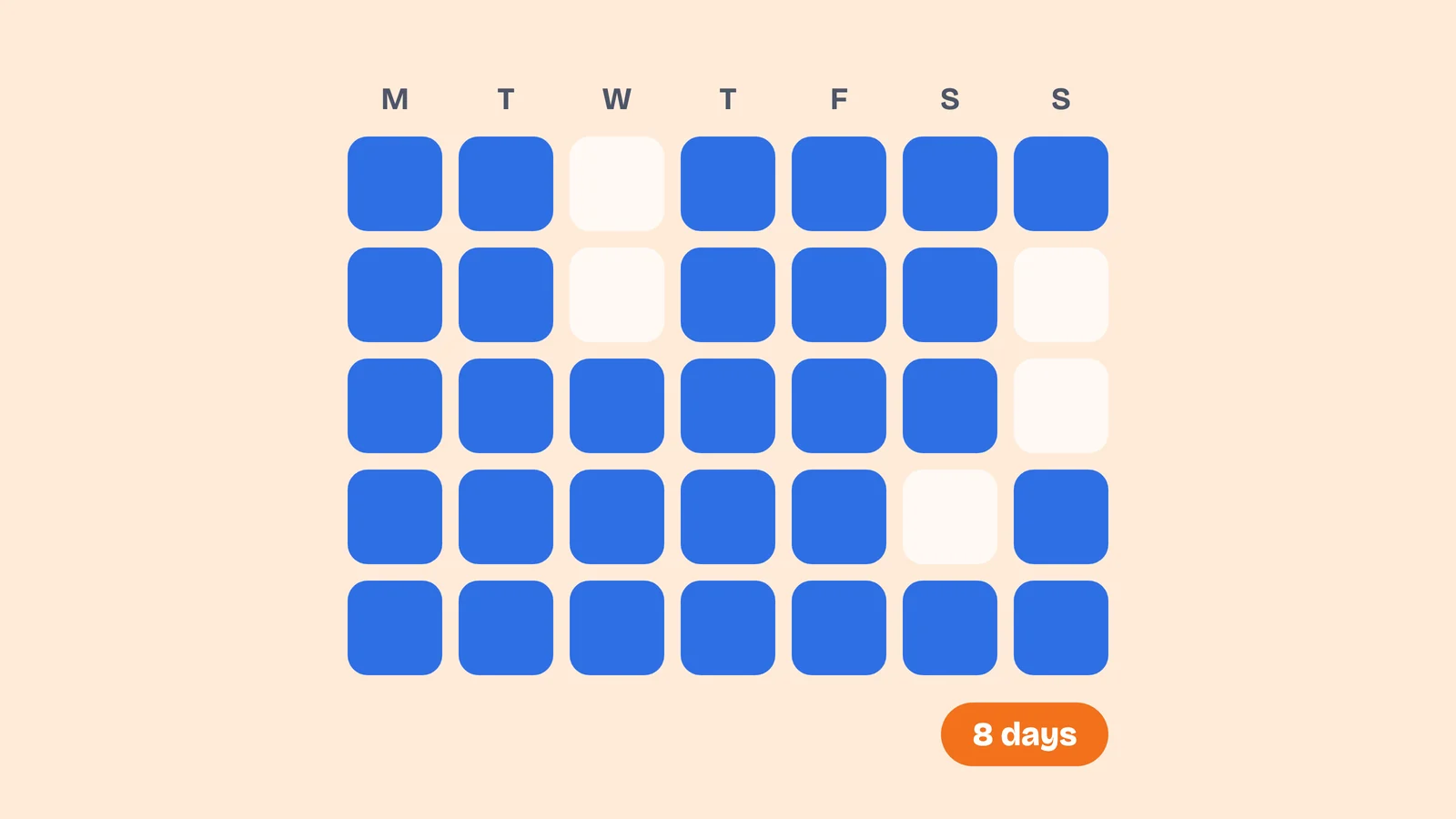
A streak helps you show up, but only if the goal is small enough to hit when you’re tired. Twenty minutes you manage every day builds a streak. An hour you skip twice a week breaks it every few days. Set the goal by your hardest day, and let the good days run long.
In Overtone
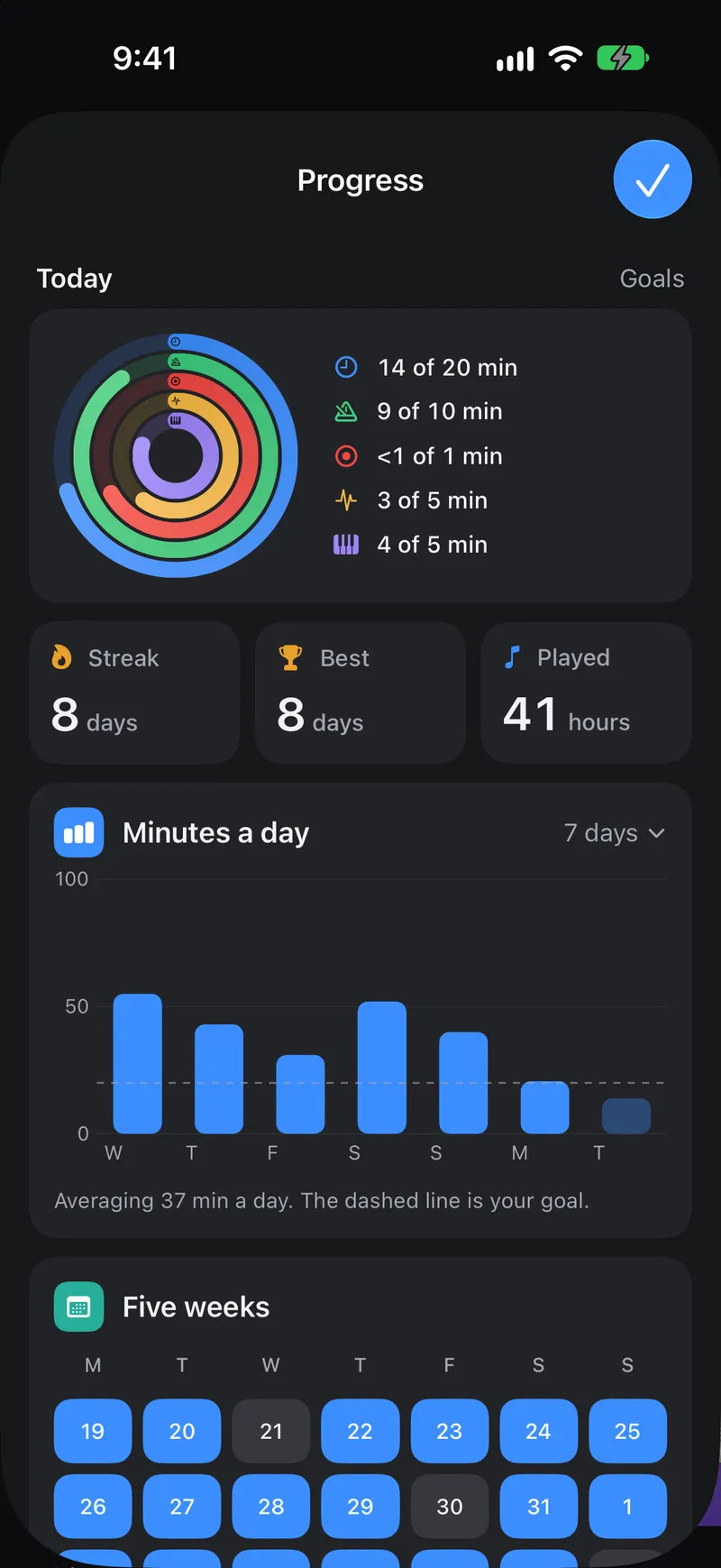
Overtone keeps the numbers, so your notebook can hold the words. Set a daily goal for each kind of practice, including the metronome, recording, analysis and sound, and its ring fills as you go. Your streak grows each day you reach the practice goal. Played hours and your level count only the time the microphone heard you playing, so time with the app open and the instrument in its case doesn’t count. Progress charts minutes a day against a dashed goal line and fills in five weeks of practiced days. Home Screen widgets keep your progress in view, and every December brings a recap of your year.
Questions
How many minutes a day should I practice?
Beginners often do well with 15 to 20 minutes, while intermediate players tend to need 30 to 60, split into blocks with short breaks. A session most days does more than a long one now and then, so choose an amount you can keep.
Is a paper practice log better than an app?
Each does a different job. Paper is quickest for the words: your goal, how you practiced and what comes next. An app is better at the counting, since it can time your playing and keep the streak for you, so many players use both.