 Overtone
Get Overtone
How to practice with a drone
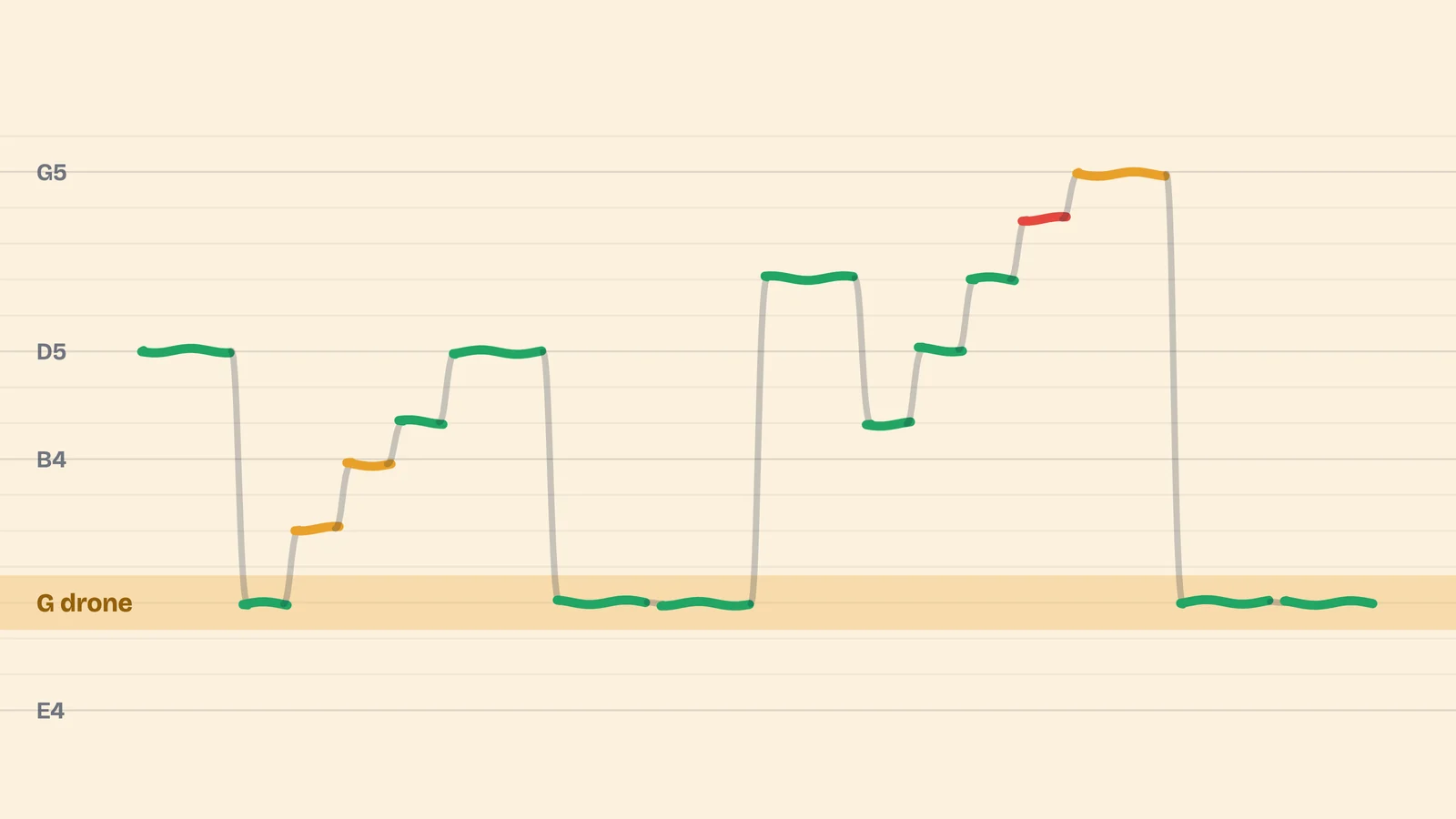
A tuner tells you whether a note was in tune. A drone teaches you to hear it for yourself, while you play. Ten minutes a day with one does more for your intonation than an hour of watching a needle.
What a drone is
A drone is a single note held underneath your playing, usually the home note of the key you’re in. Practicing a piece in D major? Hold a D. Everything you play is then heard against that one steady pitch, and your ear does the rest.
Why it works
When two notes are almost but not quite in tune, they rub against each other. You hear it as a slow wobble or roughness, called beating. The further apart the notes, the faster the beating. When they lock in, it stops and the sound rings.
That ring is something you can feel in real time, which a tuner can’t give you. You stop asking “was that right?” and start adjusting toward the sound, the way a string player or singer does in an ensemble.
A ten-minute routine
- Pick the note. Use the home note of your key, an octave or two below where you’ll be playing so it sits underneath you.
- Play the scale slowly. Hold each note for four slow beats. Listen for the wobble, adjust until it stops, and only then move on.
- Start with the easy intervals. The unison, octave and fifth lock in most clearly. Get those ringing before anything else.
- Then the thirds and sixths. These are where your ear learns the most. They ring at a slightly different place than a tuner says, which is the next point.
- Finish with your music. Take a slow passage from what you’re working on and play it over the drone. For a whole plan built around this, see How to improve your intonation on the violin.
Why thirds sound “off” on a tuner
A tuner measures against equal temperament, the system pianos use, where every semitone is exactly 100 cents. But the major third that rings cleanly against a drone is about 14 cents lower than the equal-tempered one, and a ringing minor third is about 16 cents higher.
So when you lock a major third into a drone and the tuner shows it flat, neither of you is wrong. Over a drone, trust your ear. With a piano, match the piano.
A quick reference for intervals that ring against the drone note:
| Interval | Ringing size | Compared with a tuner |
|---|---|---|
| Fifth | 702 cents | 2 cents higher |
| Major third | 386 cents | 14 cents lower |
| Minor third | 316 cents | 16 cents higher |
Tips
- Keep the drone quieter than you. It should sit under your sound, not cover it.
- If the piece changes key, change the drone with it.
- Try a different drone sound if one is hard to hear against your instrument. A cello drone under a violin is easier for some ears than a pure tone.
- Check yourself with the tuner afterward, not during. The point is to train your ear, not your eyes.
In Overtone and Overtone Lite
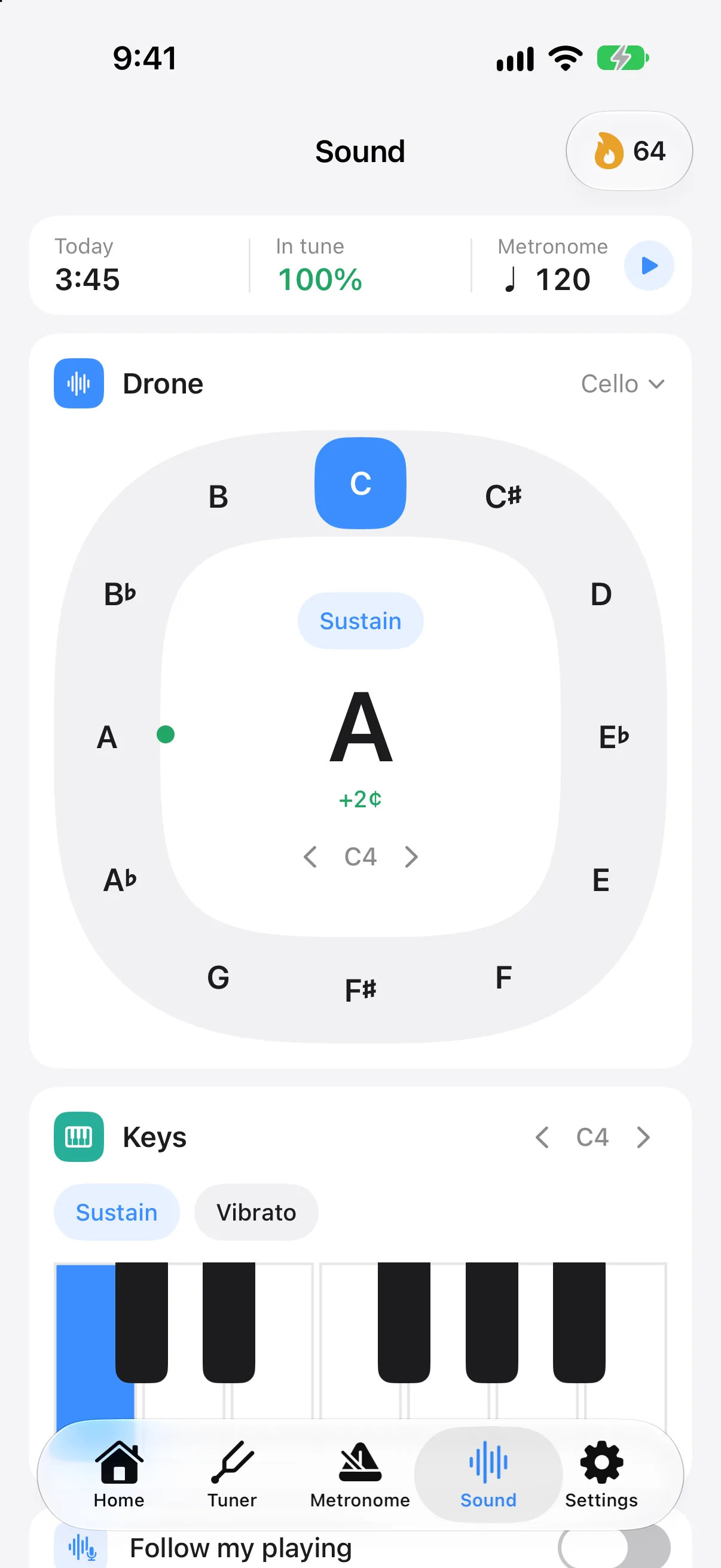
Open the Sound tab, tap a note on the drone wheel and press play. You can change the octave with the minus and plus buttons and pick the drone’s sound from the menu at the top. Every minute you play with it counts toward today’s goal.
Questions
Is a drone better than a tuner for intonation?
They do different jobs. A tuner shows you how far off a note was, after you played it; a drone lets you hear it while you play and adjust by ear, which is the skill you need in an ensemble. Use the drone to practice and the tuner to check.
How long should I practice with a drone each day?
Ten minutes is enough to make a difference, done most days. The routine above fits in that time, and you can add a few minutes of your own music over the drone once the scale feels settled.