 Overtone
Get Overtone
How to practice with a metronome
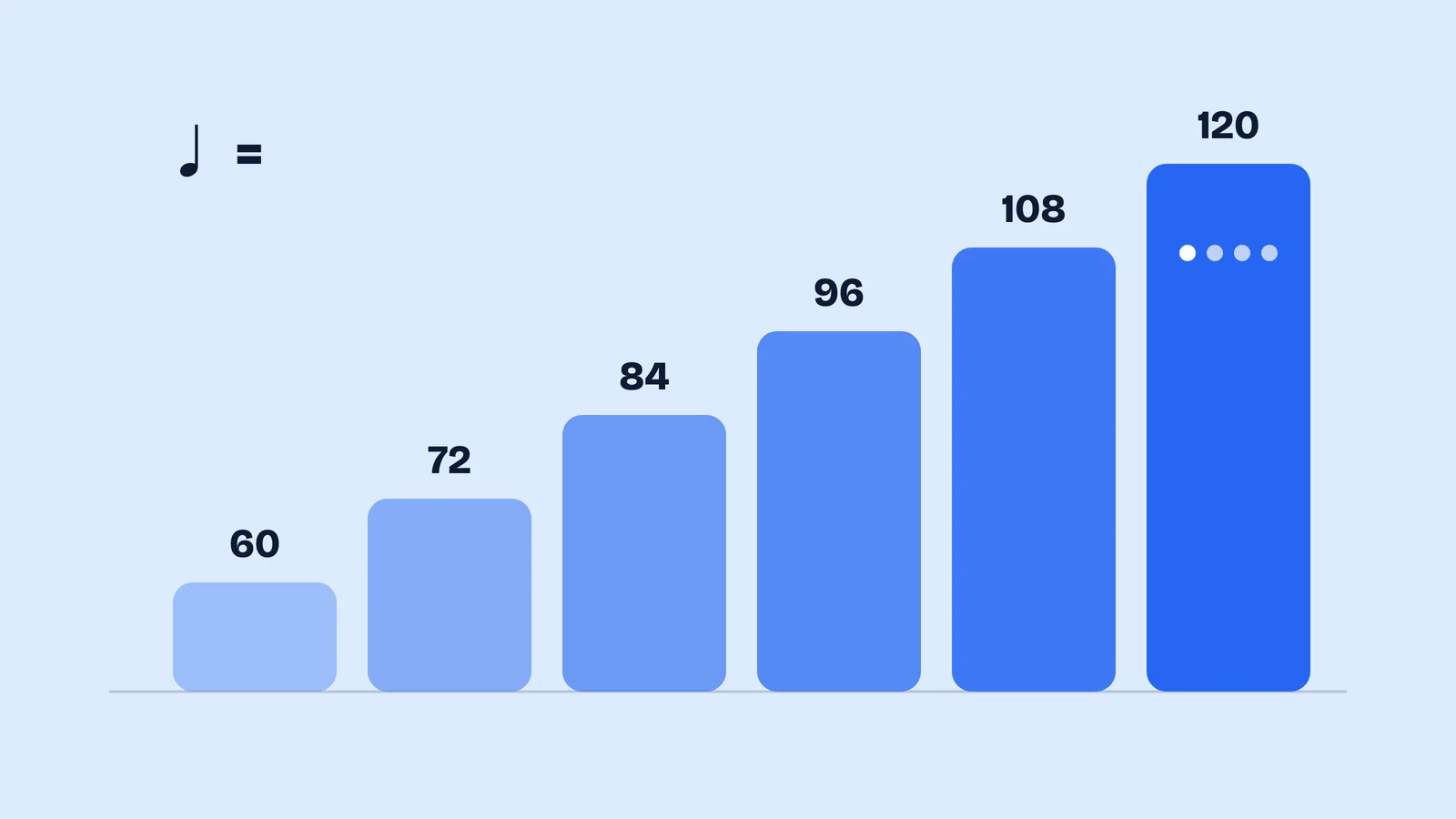
Start the metronome at a tempo where you can play the passage cleanly three times in a row, then raise it 2 to 4 beats per minute at a time, moving up only when the last tempo was clean. Most players start far too fast. Below are the numbers to use, a few ways to make the click do less as you improve, and when to turn it off.
Find your starting tempo
Pick a short passage, four to eight bars, and lower the metronome until you can play it three times in a row with no mistakes and no tension in your hands. That’s your starting tempo. For a passage you want at 120, it’s often somewhere between 60 and 70, around half speed.
It will feel slow, and it should. At this tempo you have time to think about each note, so your hands learn the right motion instead of a hurried version of it.
Using a metronome to build speed
Once a tempo is clean three times, raise it by 2 to 4 BPM. Keep the steps small, because a jump of 10 or more is usually where the tension comes back. When the passage falls apart, go back two steps, get it clean again and climb from there.
You’ll lose a little overnight, so start each session a few BPM below yesterday’s best. Write down where you finished in your practice log, with the bar numbers and the date, like “bars 17 to 24, clean at 84.” Here’s how a week might look for a passage you want at 120:
| Day | Start at | Clean by the end |
|---|---|---|
| Monday | 60 | 72 |
| Tuesday | 66 | 80 |
| Wednesday | 74 | 88 |
| Thursday | 82 | 94 |
| Friday | 88 | 100 |
If one bar keeps breaking at the same tempo, take it out and work on it alone. Fixing the bar that keeps falling apart walks through how.
Subdivide the slow beats
Slow tempos have a catch. With a whole second between clicks, it’s easy to rush the notes in between and then wait for the beat. Set the metronome to click every eighth note, or every sixteenth in a fast run. At 60 BPM with eighths you hear 120 clicks a minute, and every note has a click to land on.
As the tempo climbs past about 90, go back to quarter notes. At fast tempos, that many clicks blur together.
Make the click do less
Once a passage is steady, move the click off the beats you’d normally count. For a piece in 4/4 at 120, set the metronome to 60 and hear each click as beats 2 and 4. Jazz players practice this way, and it works for anyone, because you have to supply beats 1 and 3 yourself.
Then try one click a bar: 30 BPM, heard as beat 1. If you’re still with the click after eight bars, you’re keeping time on your own.
Turn the metronome off at the end
The metronome builds the passage, but music doesn’t keep perfectly even time. Spend the last few minutes of each session playing without it, with the phrasing and rubato you want. Then switch it back on for one run at your target tempo. If you finish ahead of the click, you rushed somewhere, and that’s where tomorrow starts.
Slow work with a metronome helps your pitch too, because at half speed you can hear every note. See How to improve your intonation on the violin.
In Overtone
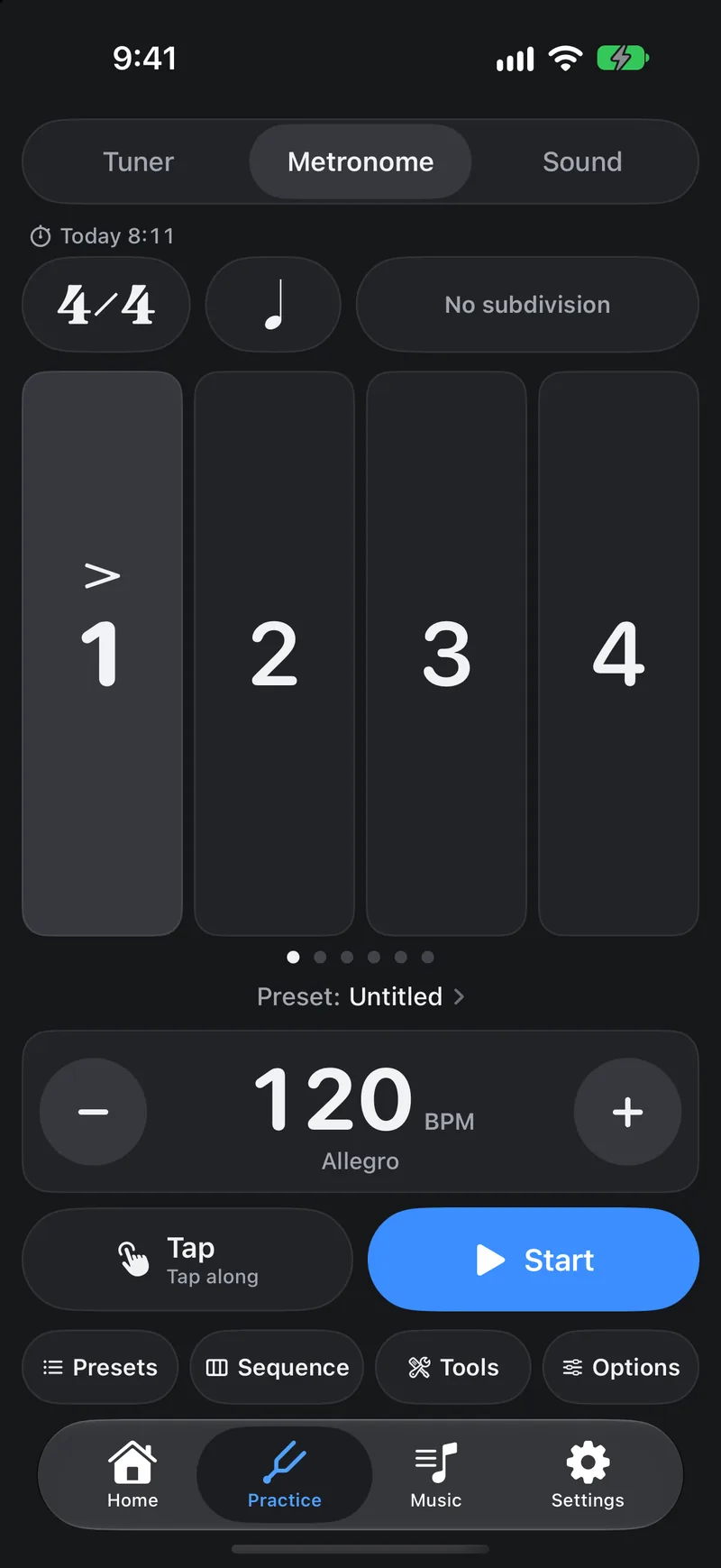
One tap starts the click, or tap along on the Tap button to set the tempo. Under Tools, the Trainer does the climbing for you: choose a step such as +2 BPM, how many bars to play before each step, and the tempo to stop at. It can also leave out the click for a bar or two at a time, to test your pulse.
Subdivisions add eighths or sixteenths between the beats for the slow work above. If a piece changes meter, set it up once as a Sequence, with a time signature and tempo for each part, and the metronome follows the changes. The clicks are recorded sounds, like a wood block or a cowbell, instead of a beep, and you can start and stop them from the Lock Screen or your Apple Watch.
Questions
Should I always practice with a metronome?
No. Use it while you build a passage or check how steady you are, then spend part of every session without it. If you only ever play with a click, you can end up leaning on it, and the music starts to sound stiff.
Why do I keep rushing ahead of the metronome?
Usually it’s the notes between the clicks: you hurry through them and arrive early. Turn on eighth-note subdivisions so every note has a click to land on, and lower the tempo until you can hear yourself sit on the beat. Tension makes it worse, so check your shoulders and your grip.