 Overtone
Get Overtone
How to memorize a piece of music
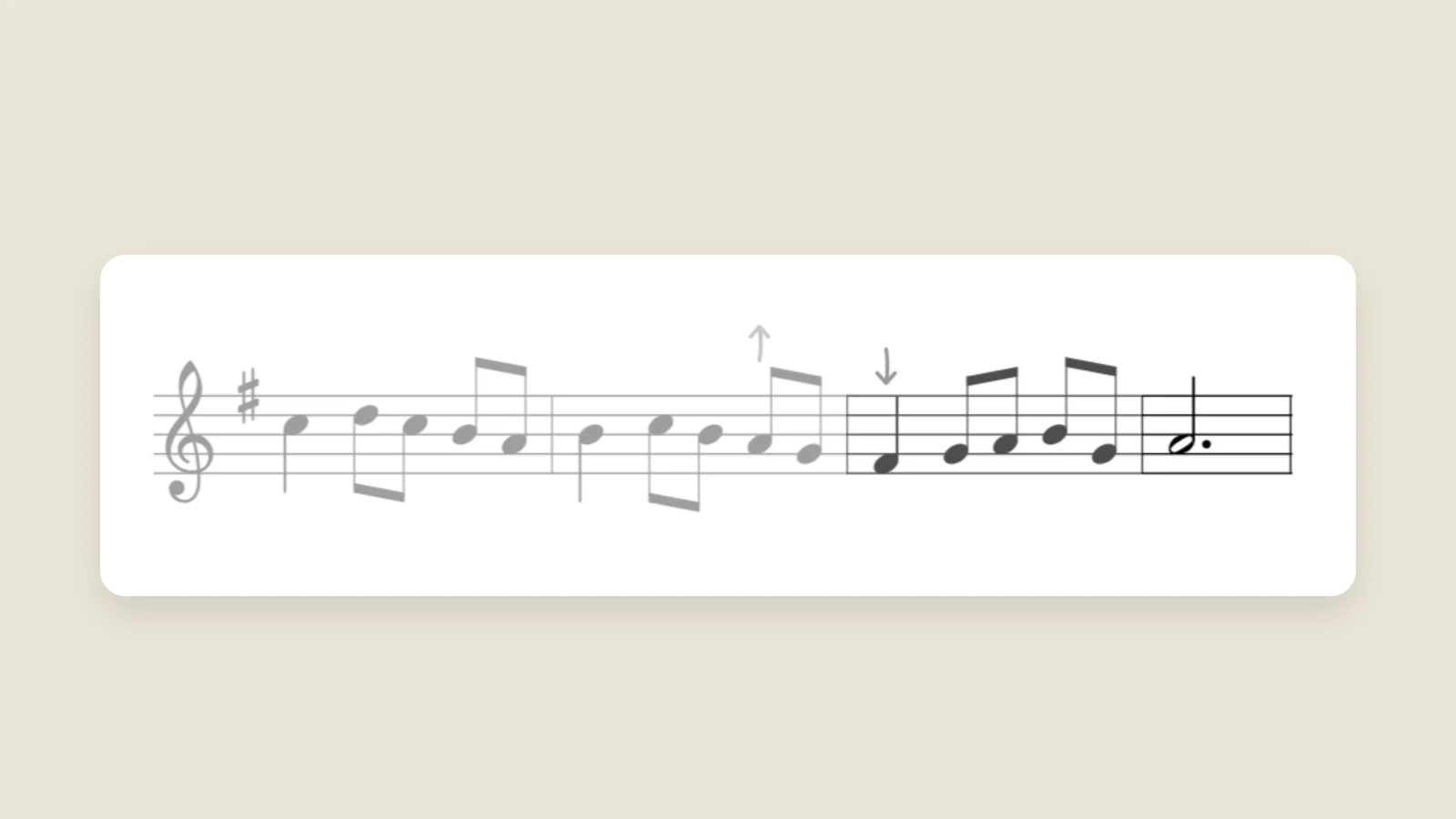
The reliable way to memorize a piece of music is to work in chunks of two to four bars, taking the score away from each chunk before you add the next, and to learn every passage in more than one way: by ear, by sight, by its harmony and by feel. Then review it over the following days and test it by starting from anywhere. This guide walks through each step, with a review schedule for the first two weeks.
Memorizing music in small chunks
Pick a chunk that ends where the music breathes, usually two to four bars. Play it from the score twice. Then look away, or turn the page over, and play it again. When it goes wrong, glance back, find the note and look away again. Once it’s right from memory three times in a row, move on.
Then join them. Play chunk one into chunk two, then two into three. Slips tend to happen at the joins, so also practice the last bar of one chunk into the first bar of the next.
Ten or fifteen minutes of this is plenty for one sitting.
Four kinds of musical memory
Most players memorize by repetition, until their fingers know the way. That memory is real, but it’s the first to go when you’re nervous, because it runs on autopilot. Back it up with the other three:
- Aural. Sing or hum the chunk before you play it. If you can’t sing it, you don’t know it yet.
- Visual. Know where the passage sits on the page: fourth line, just before the repeat sign.
- Harmonic. Name the key, and the chord in each bar if you can. “Bar 9 moves to D major” is something you can think your way back to.
- Physical. Fingerings, bowings, breaths and shifts. Pencil them in so they’re the same every time.
Give yourself places to start
Mark a starting point every four to eight bars, at the beginning of a phrase, and number them in pencil. Practice starting cold from each one. If you slip in a performance, you jump to the next number and carry on instead of going back to the top, and most listeners never notice.
Practicing away from the instrument
Mental practice shows you exactly what you know. Sit somewhere quiet, close your eyes and play the piece in your head at tempo, hearing each note and feeling each finger move. Where the picture goes blank, you’ve found a gap. Check the score, fix that spot, and try again.
Five minutes is enough, on a bus or before bed. Pianists can try one hand at a time.
Reviewing so it stays memorized
Memory fades fastest in the first few days, so spread your reviews out instead of drilling everything in one day. A review is a single play from memory. If it holds, you’re done; if not, fix the spot and stop.
| When | What to do |
|---|---|
| Day 1 | Learn the chunk and join it to the one before |
| Day 2 | Play it from memory once, before anything else |
| Day 4 | Again, with the chunks on either side |
| Day 7 | The whole section from memory |
| Day 14 | Start from a random numbered starting point |
Testing it by starting from anywhere
A piece you can only play from the top isn’t memorized yet; it’s a chain, and one broken link stops the whole thing. Try these:
- Ask someone to point at a bar on the page, and start there.
- Play it at half tempo. Slow playing takes away your momentum, and the holes show.
- Play it for one person, or record yourself playing it from memory. A little pressure finds what a quiet practice room hides.
In Overtone
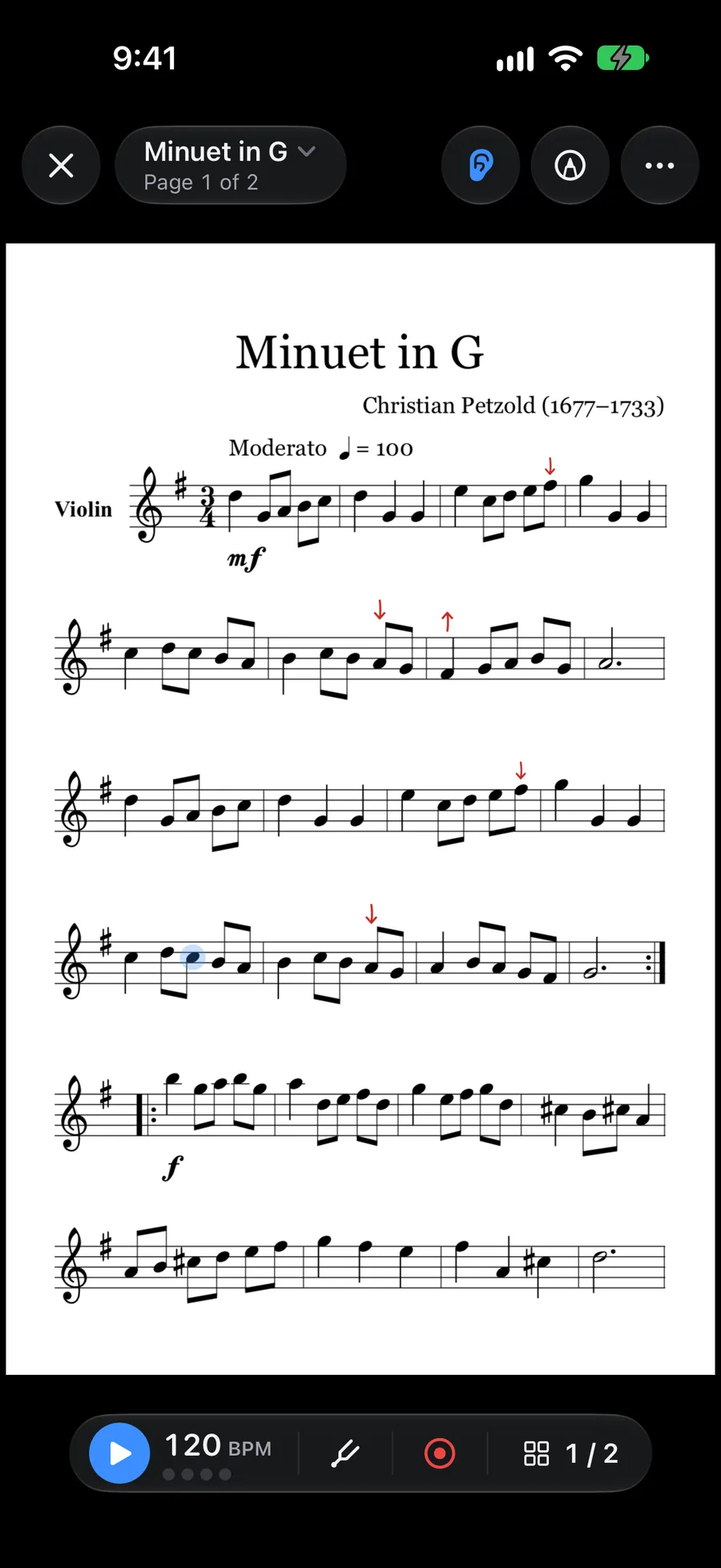
Open the piece in Overtone’s score reader on iPhone or iPad and turn on Memorize. Overtone follows the score as you play, and every bar you play correctly fades a little, until you’re playing from empty staves and barlines. Slip, and the bar comes straight back. If you stop partway through a faded passage, the next bar shows faintly again as a prompt. Memorize turns Listen on too, so a bar that keeps going wrong gets marked as tricky, and opening it takes you through the steps in Fixing the bar that keeps falling apart.
Questions
How long does it take to memorize a piece of music?
It depends on length and difficulty, but a one-page piece learned a few bars at a time, ten to fifteen minutes a day, often takes one to two weeks. Getting it ready to perform takes longer, so plan a few more weeks of short reviews after it first feels solid.
What should I do if I forget the music while performing?
Keep the pulse going and jump to the next starting point you practiced, instead of going back to hunt for the note you lost. Listeners notice a stop far more than a skipped bar, which is why those starting points are worth practicing cold.