 Overtone
Get Overtone
How to record yourself practicing (and what to listen for)
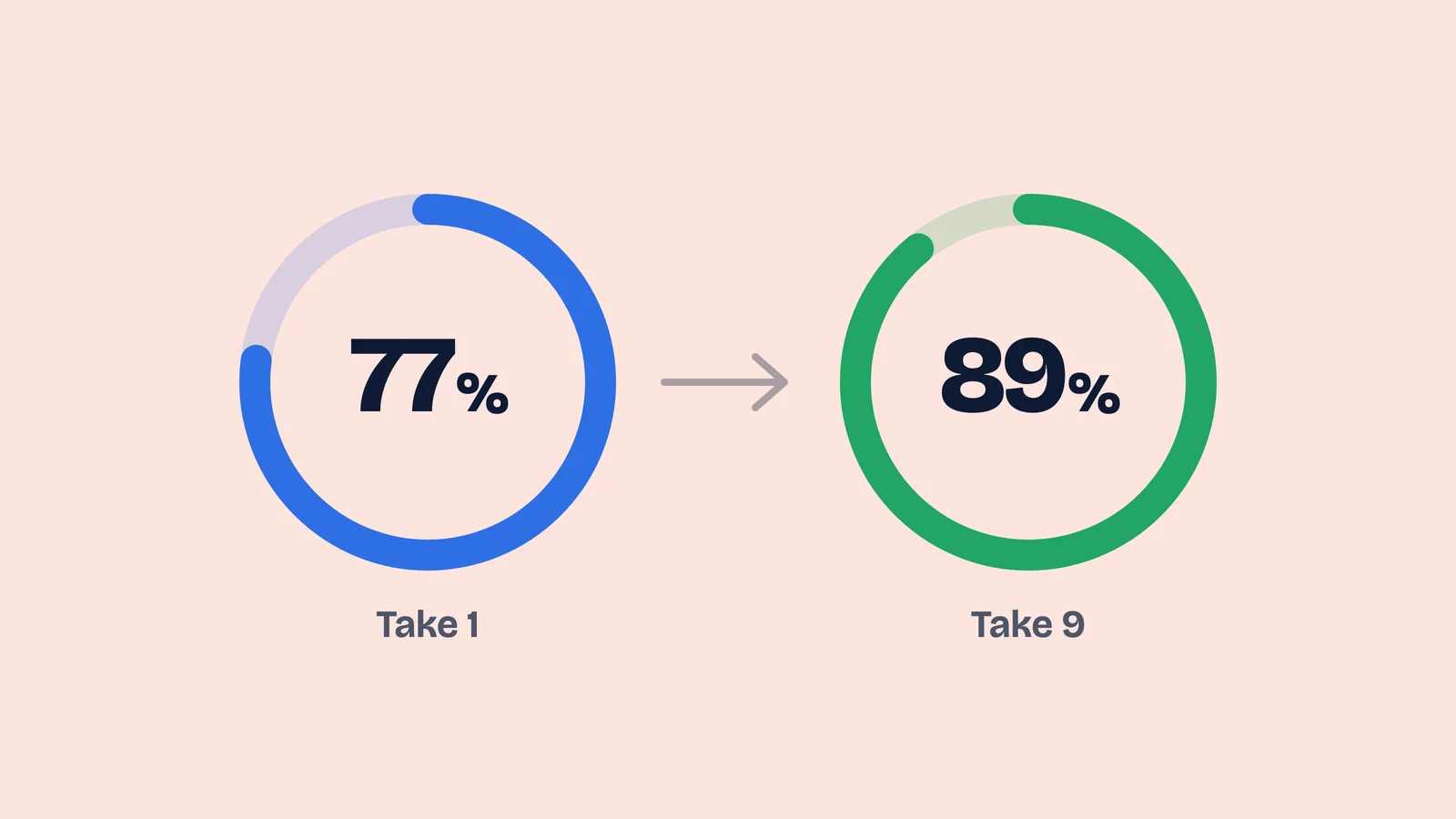
To record yourself practicing, set your phone on a stand three to six feet away, record a short section instead of the whole piece, and listen back with the score open, paying attention to one thing per listen. Keep the takes, because comparing this week with last month is how you hear progress. Below is how to set up, and what to listen for once you press play.
Setting up to record yourself
Your phone’s microphone is fine; where you put it matters more.
- Three to six feet away, at about chest height, on a stand or a shelf. Brass, drums and an open piano can go back to ten feet. On your music stand the phone is too close, and picks up breath and key clicks louder than your sound.
- Test the loudest bar first. Play it, listen back, and check that it doesn’t crackle or flatten out. If it does, move the phone back.
- Turn on Do Not Disturb, so nothing rings in the middle of a take.
Use the same room and the same spot each time, so when two takes sound different, the difference is your playing.
Record short sections
A whole piece makes a ten-minute recording you won’t want to sit through. Record one passage of 30 seconds to two minutes, the part you’re working on this week. Say the bar number out loud before you start, so you know where you are when you listen back.
What to listen for in a practice recording
Listen for one thing at a time. Judge everything at once and you come away with a vague sense that it was fine, or bad, and nothing to fix. Pick one per listen:
- Pitch. Long notes, and the note right after a shift or a leap. A note 10 to 25 cents off is easy to hear on a recording even when you missed it while playing. What the cents on your tuner mean explains those numbers.
- Rhythm. Tap along, or play the recording against a metronome. Most players rush the easy bars and drag the hard ones.
- Dynamics. Does the forte sound much louder than the soft passages? On a recording there’s usually less difference than you thought you were making.
- Tone. How each note starts, and whether the ends of phrases taper or just stop.
Listen with the score and a pencil
Listen with the music in front of you and mark what you hear on the page: an arrow up for sharp, an arrow down for flat, a circle where the rhythm wobbled. Then pick one or two marks to fix today, record the passage again, and listen: the new take tells you whether the fix worked. If the same bar keeps collecting marks, try the steps in Fixing the bar that keeps falling apart.
Keep old takes and compare them
Day to day you can’t hear yourself improve, because you get used to your own sound. Record the same passage once a week and keep every take, named with the date. After a month, play the first one and the latest one back to back. The difference is usually bigger than you expected, and whatever hasn’t changed is next on the list.
A recorded run is also a good test for a piece you’re learning by heart, as we cover in How to memorize a piece of music.
Video for posture
For posture, prop the phone off to one side at about 45 degrees, far enough back to fit your whole body in. Watch it once with the sound off and look for one thing, such as raised shoulders or a bow drifting toward the fingerboard.
In Overtone
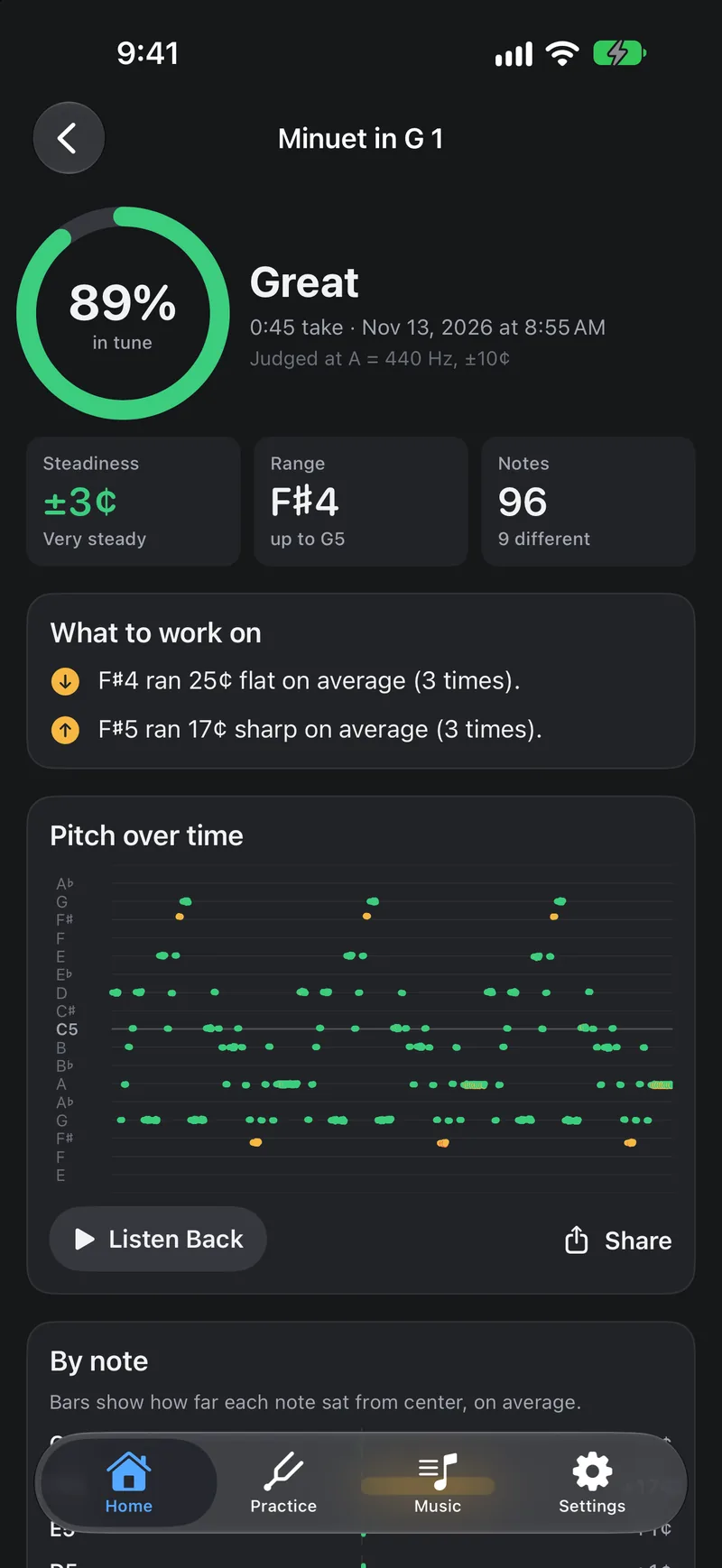
Open a piece in Overtone’s score reader and press record. When you stop, the take gets a report. The big number is how much of it was in tune, and under “What to work on” it lists the notes that were off and by how much, such as “F♯4 ran 25¢ flat on average (3 times).” Listen Back plays the take, and a chart draws your pitch over time. Each take stays with the piece, so weeks later you can open the first one and see how far it’s come. Every minute you record counts toward today’s practice rings.
Questions
How far away should I put my phone to record my instrument?
About three to six feet for most instruments, at chest height and pointed at you. Loud instruments like trumpet or drums can go further back, to ten feet or so.
Why do I sound worse on recordings than I do while playing?
While you play, you hear yourself from inches away and partly through your own body, and your attention is already on the next note. A recording takes both away, so you hear what a listener in the room hears. It’s a fairer picture, and most players stop minding it after a few weeks.