 Overtone
Get Overtone
Fixing the bar that keeps falling apart
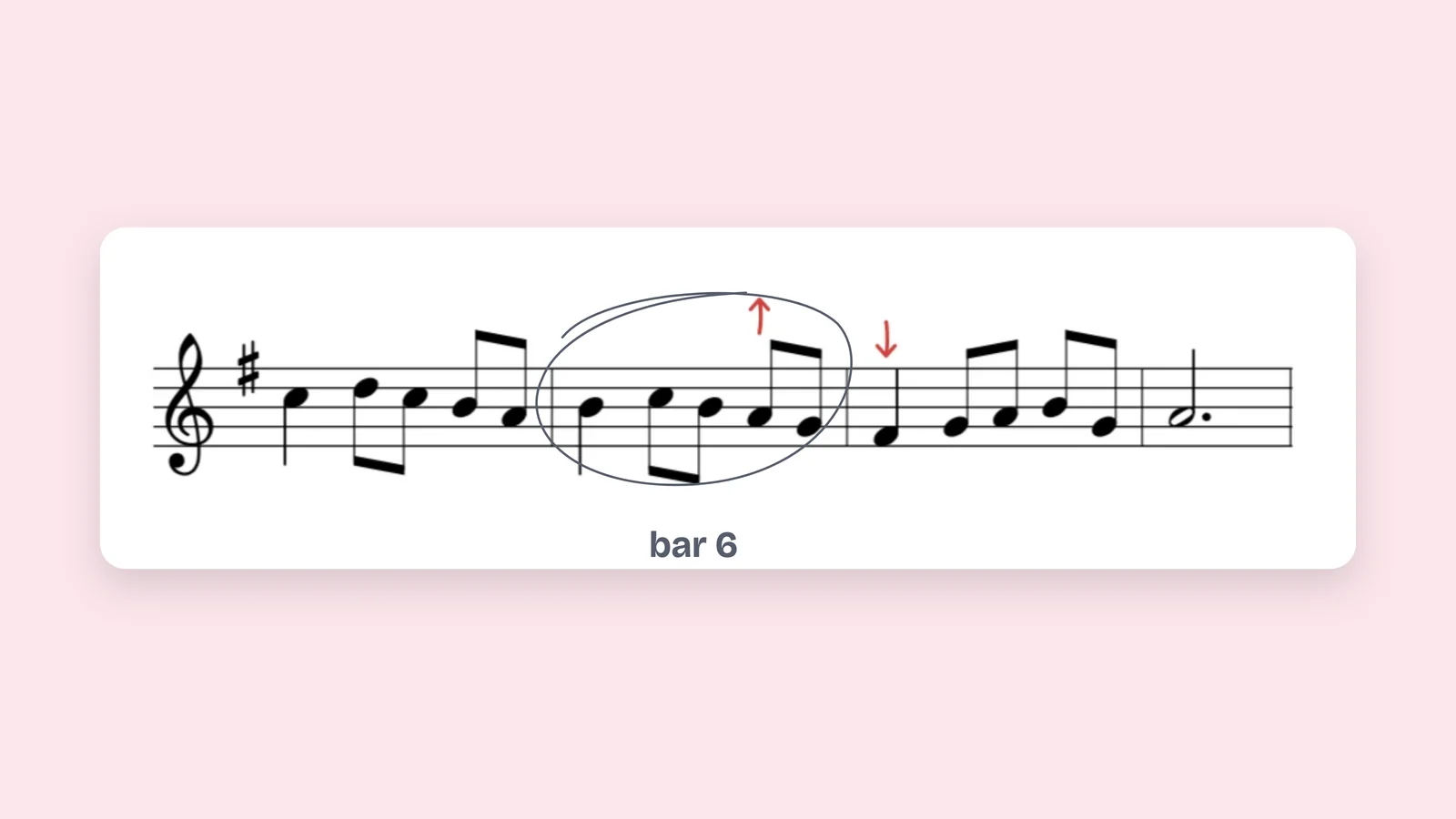
Every piece has one. The bar you stumble on every time, no matter how well the rest goes. The usual fix, starting again from the top, is the slowest one there is.
Why running it again doesn’t work
If a piece takes two minutes and the hard bar takes three seconds, a run-through gives that bar three seconds of practice. Ten runs, thirty seconds. Worse, you arrive at it tense, already expecting to miss, and you practice missing it.
The fix is to take the bar out of the piece, make it easy, and then make it hard again in small steps.
1. Find the exact spot
“Bar 12” is too big. Play it slowly and notice where it actually goes wrong. It’s often not the fast notes but the moment before them: a shift, a string crossing, a breath, a fingering you change your mind about. Circle those two or three notes.
2. Slow it down until it’s clean
Set the metronome to a tempo where you can play the spot correctly three times in a row without thinking hard. That might be half speed or less. That’s fine. You’re teaching your hands the right motion, and they learn whatever you repeat.
Then raise the tempo a few beats per minute at a time. When it falls apart, go back two steps. A tempo trainer does this counting for you; How to practice with a metronome has the whole method.
3. Change the rhythm
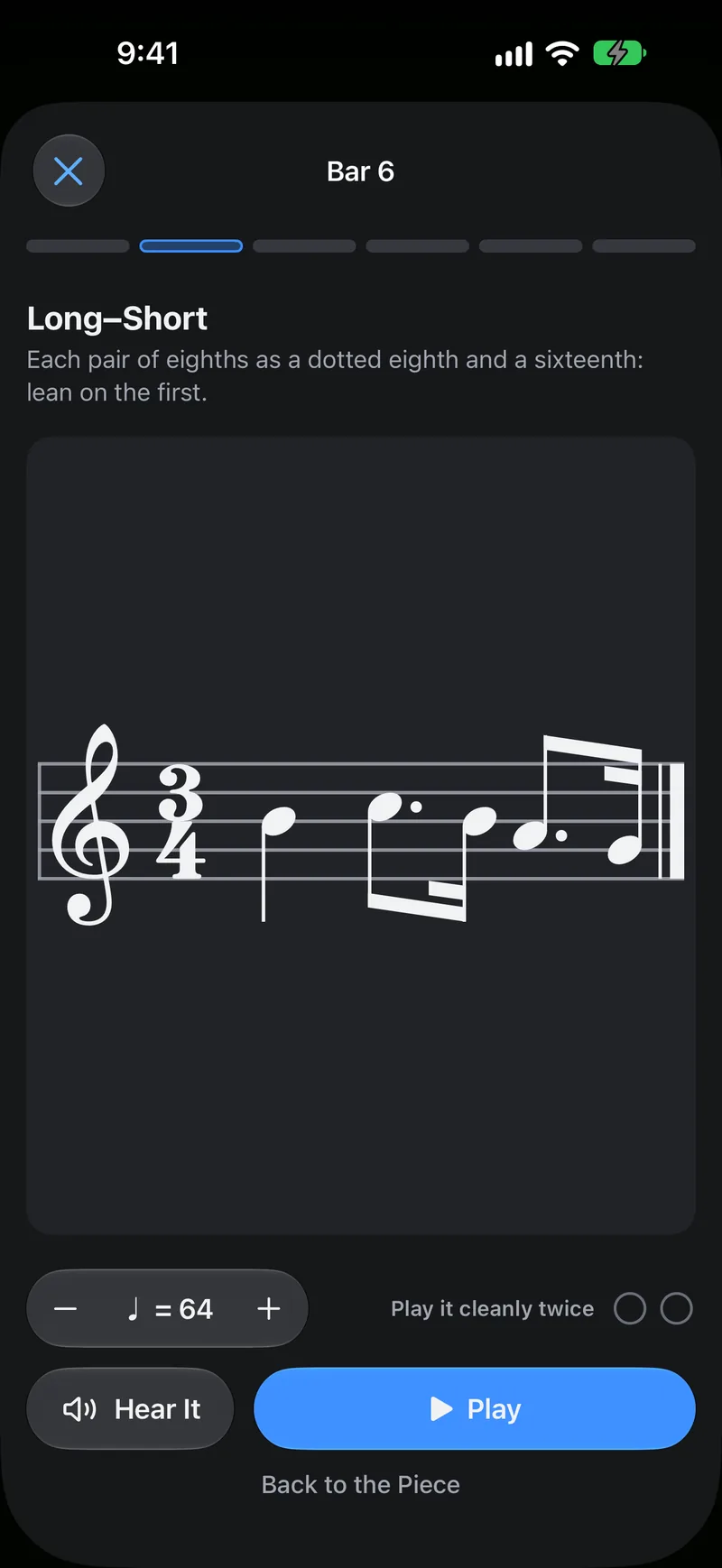
This is the old trick teachers swear by. Play a run of even notes as long–short, long–short. Then short–long. Then in groups of three with a pause after each group.
Each new rhythm forces you to arrive on a different note quickly and land cleanly, so every note in the passage gets its turn being the hard one. When you go back to even notes, they feel slow.
4. Build it a few notes at a time
Play the first two notes. Then three. Then four. Add one note each time, and only once the last version was clean. Some players prefer to start from the end and work backward, so the part they know best is always the last thing they play.
5. Put it back
A bar fixed on its own can still fall apart in context, because the way into it changes. Start one bar before and finish one bar after. Then two before. Then from the start of the phrase.
6. Stop while it’s good
When you’ve played it cleanly three times in a row at your target tempo, stop for today. Coming back tomorrow does more than ten extra repetitions now. Sleep is part of practice.
In Overtone
When you play a piece with Listen on, Overtone notices the bars that keep going wrong and marks them as tricky. Open one and it takes you through these steps: slowly as written, in dotted rhythms both ways, three notes at a time, backward from the end, and on into the next bar. It listens to each step and moves on once you’ve played it cleanly twice. The tempo trainer raises the tempo step by step, and every take gets a report.
Questions
How slow should I practice a hard passage?
Slow enough that you can play it correctly three times in a row without straining, which is often half the marked tempo or less. If you’re guessing at notes, it’s still too fast.
How many times should I repeat a passage?
There’s no fixed number. Aim for three clean runs in a row at one tempo before you move the metronome up, and stop for the day once it’s clean at your target, because repeating mistakes teaches them too.