 Overtone
Get Overtone
What the cents on your tuner mean
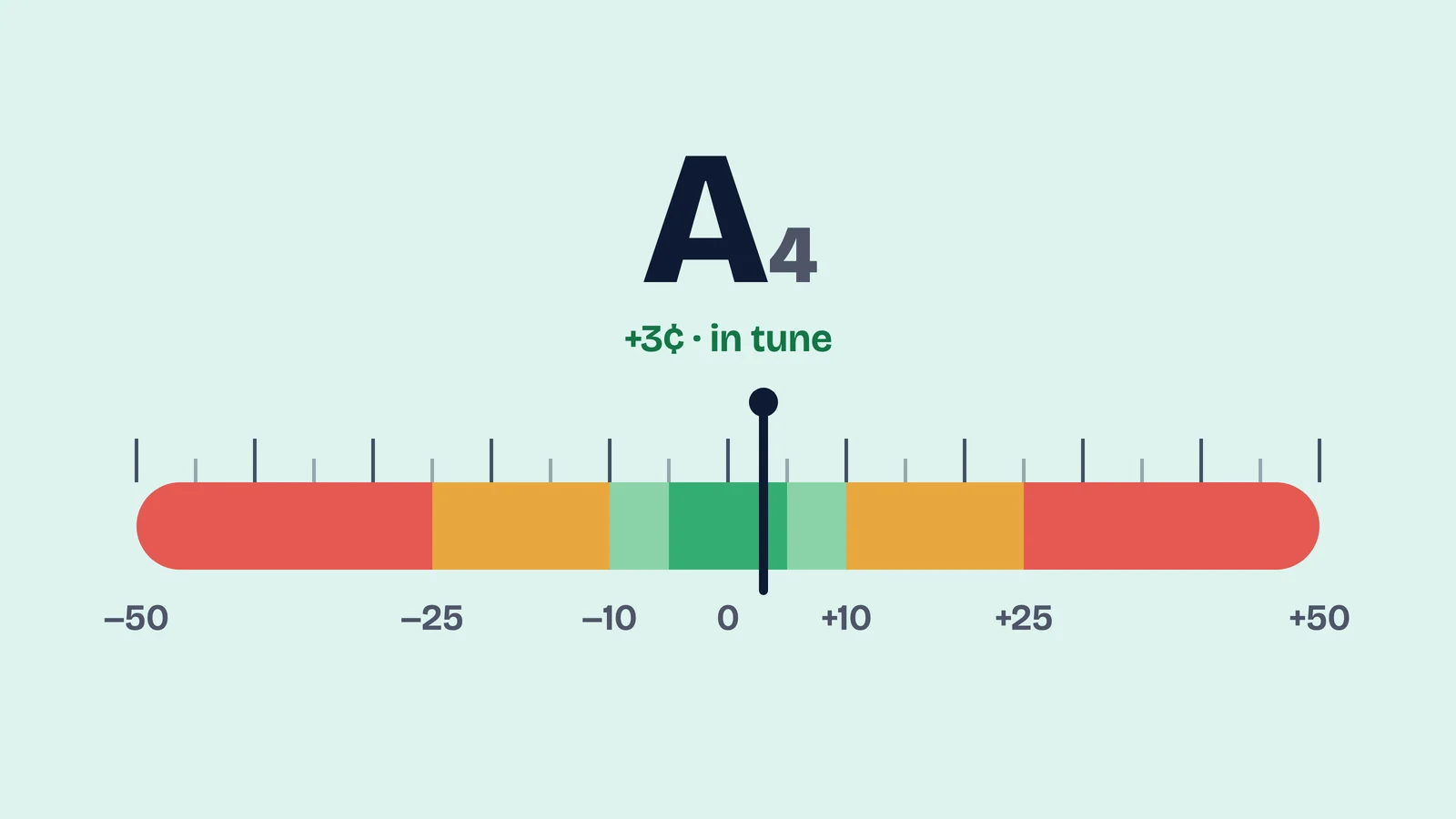
Most tuners show a number next to the note: +3, −12, 0. That number is in cents, and once you know what it means, you’ll know when to keep adjusting and when to stop.
A semitone is 100 cents
Cents divide the distance between two neighboring notes, like A and B♭, into 100 equal steps. An octave is twelve semitones, so it’s 1,200 cents.
Cents work the same way at every pitch. Twenty cents sharp on a low cello C and twenty cents sharp on a high flute C sound like the same amount out of tune, even though the difference in hertz is very different. That’s why tuners use them.
Reading the number
- A plus sign means sharp, higher than the note. A minus sign means flat, lower.
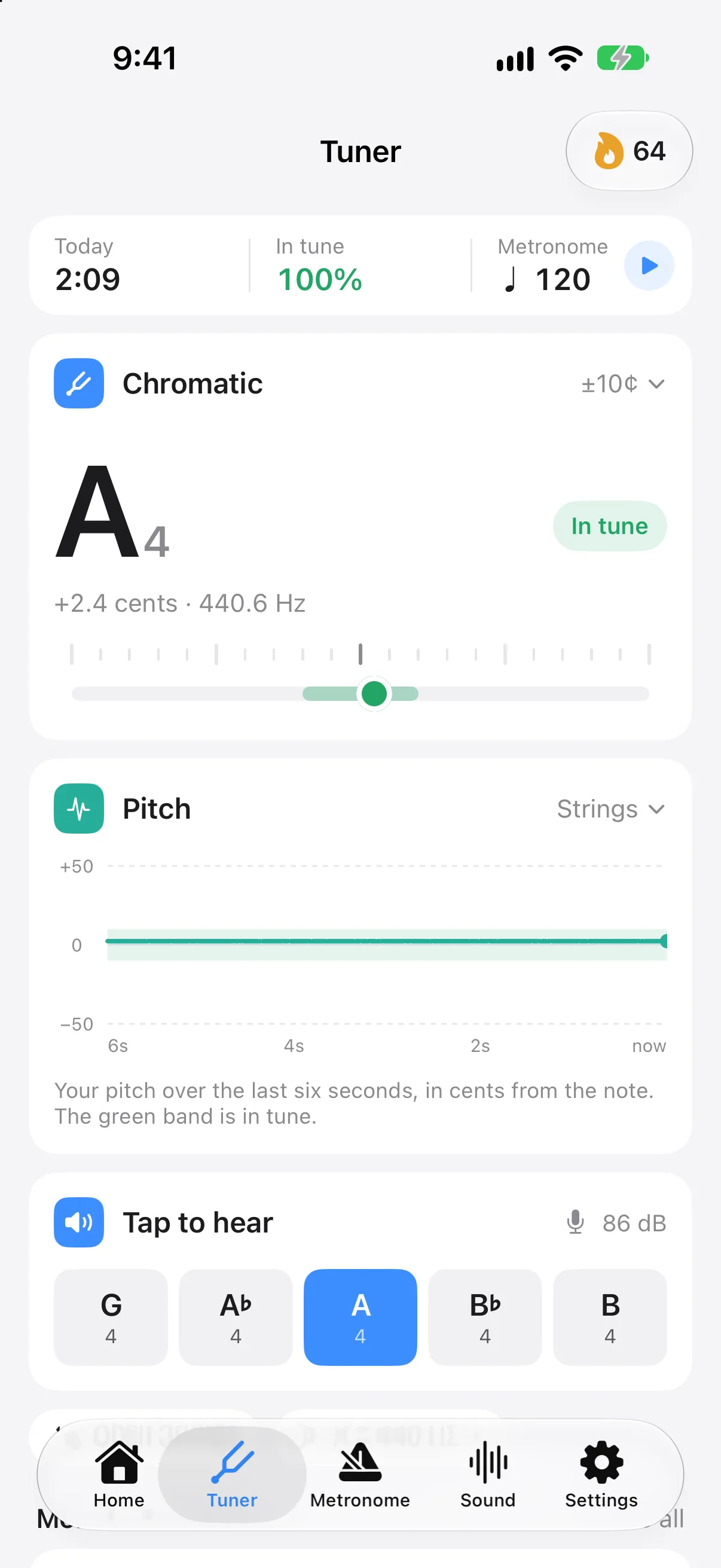
- Hertz is the raw frequency. A4 is 440 Hz. If your tuner shows 440.6 Hz, that’s A4 and 2.4 cents sharp, which nobody can hear.
- The note name is the nearest note. If you’re 50 cents away, you’re exactly halfway, and the tuner could show either neighbor.
How close is close enough?
There’s no single answer, but here’s a useful rough guide:
| Off by | What it means |
|---|---|
| 0 to 5 cents | In tune for practical purposes. Stop adjusting. |
| 5 to 10 cents | Close. Fine in a fast passage; worth fixing on a long, exposed note. |
| 10 to 25 cents | Audibly out, especially next to another instrument. |
| More than 25 cents | Clearly off. Check your finger, embouchure or string. |
That’s why Overtone’s tuner counts anything within ±5 cents as in tune by default. When you’re tuning open strings or a reference note, tighten it in the menu at the top of the tuner to ±2.5 or ±1 cent, or loosen it to ±10 for quick passages.
Your reference pitch matters too
All of this is measured from a reference, almost always A = 440 Hz. Many orchestras tune a little higher, to 442 or 443 Hz. A at 442 Hz is about 8 cents above A at 440, so if your group tunes high, set your tuner to match. Otherwise everything will look slightly sharp.
When not to chase zero
A tuner measures against equal temperament, the tuning a piano uses. When you play with other people, good intonation sometimes means leaving that grid: thirds in a chord sit lower or higher so they ring. We wrote about that in How to practice with a drone.
And warm up before you tune. Wind instruments go sharp as they warm, and strings settle as they stretch. Tune, play for a few minutes, then check again.
Watch it settle, not jump
The single number is a snapshot. What helps more is seeing how your pitch moves while you hold a note: does it start flat and creep up, or drift at the end of the bow? Overtone and Overtone Lite draw your pitch over the last six seconds under the note, so you can see the shape, not just the score.
Questions
What does +10 cents mean on a tuner?
The note is a tenth of a semitone sharp of the pitch the tuner expected; a minus sign means flat by the same amount. Next to another instrument most people can hear 10 cents, so it’s worth bringing down on a long, exposed note.
Should I tune to A = 440 or 442?
Tune to whatever the group you play with uses. Most bands and many orchestras use 440 Hz, and some orchestras tune to 442 or 443 Hz. On your own, 440 is the standard.