 Overtone
Get Overtone
How to practice sight-reading every day
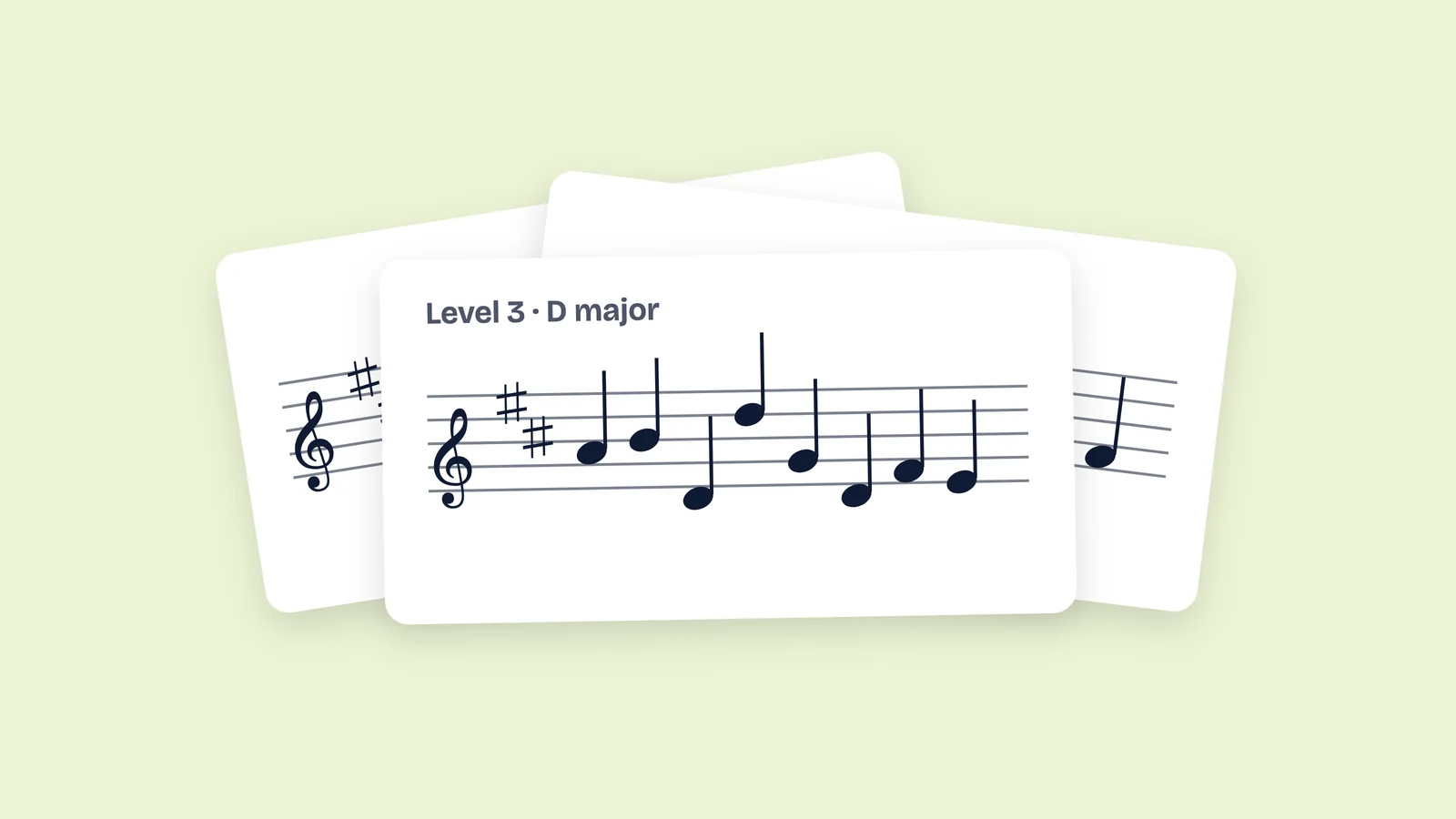
To practice sight-reading, read a little new music every day: short pieces a level easier than what you play, at a slow tempo, without stopping to fix mistakes. Ten minutes a day does more than an hour once a week. Here’s how to choose the music, what to check before you play, and a routine to start with.
Why a little every day works
Good readers don’t read one note at a time. They see a scale going up or a broken chord, and their hands already know the shape. That vocabulary comes from reading lots of different music, and like a language it builds best a little every day.
It also has to be new music. Read a piece twice and the second time you partly remember it. By the third, your memory is doing the work and you’re no longer reading. Every piece gets one honest read.
Choose music a level below your playing
Sight-reading material should feel easy. If you’re working on pieces at grade 5, read at grade 3 or 4. There’s a simple test: if you have to stop more than once or twice a line, it’s too hard, and you’ll be practicing stumbling instead of reading. Keep it short, too. Eight to sixteen bars is plenty for one read.
Look before you play
Take thirty seconds before you start, about what a graded exam gives you, and check these in order:
- Key signature. Name the sharps or flats and hear the scale in your head. Then look for accidentals and key changes.
- Time signature. Two beats in a bar or three? Is the beat a quarter note or a dotted quarter?
- The hardest rhythm. Find it and count it under your breath, or tap it on your leg.
- Range. Find the highest and lowest notes, and any shift they need.
- Patterns. Repeats, sequences, a phrase that comes back. Anything you’ve read once is free the second time.
Go slowly and keep going
Set a metronome at 60 to 80 percent of the marked tempo, so a piece marked ♩ = 100 gets read somewhere between 60 and 80. Count one full bar out loud before you begin. Our guide to practicing with a metronome has more on holding a steady beat.
Then the one rule of sight-reading: don’t stop, and don’t go back. If you miss a note, the beat goes on and so do you. Leave notes out if you have to, but keep the rhythm. A conductor will forgive a wrong pitch on the beat much sooner than a right one that arrives late. Fixing mistakes is a separate job, done slowly and on purpose, as in Fixing the bar that keeps falling apart.
Read ahead, and read rhythm on its own
While you play one beat, your eyes should already be on the next. To train it, slide an index card along the line so it covers each bar just as you start playing it.
Rhythm is where most readings fall apart, so practice it separately. Take a new line, ignore the pitches, and clap the rhythm while counting “1 and 2 and” out loud. Once rhythms read easily, your attention is free for the notes.
A sight-reading routine for ten minutes a day
| Minutes | What to do |
|---|---|
| 2 | Clap and count the rhythm of one new line. |
| 3 | Scan a short new piece for thirty seconds, then play it once without stopping. |
| 3 | Do the same with a second piece. |
| 2 | Note where each one went wrong, and why. |
Don’t replay the pieces you just read. When you get through three in a row with only a slip or two, move up a level. If you’re stopping often, drop back for a week. Writing the level down each day in a practice log shows you how far you’ve come.
In Overtone
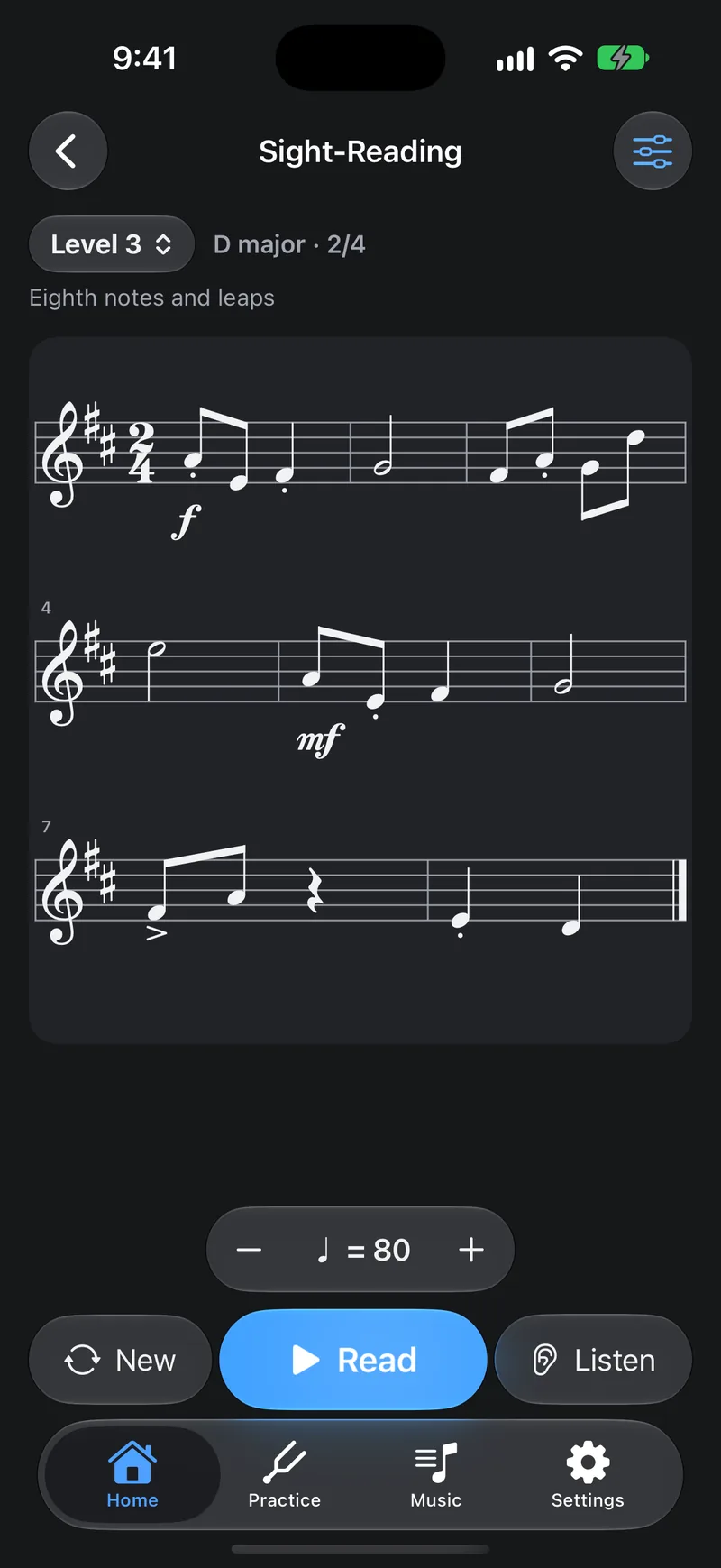
Open Sight-Reading and pick a level. Each one adds something: level 3, for example, brings in eighth notes and leaps. Every melody is new and written for your instrument, with its key and meter shown on screen for your scan. Set the tempo, press Read and play, and Overtone checks each note as you play it. Listen plays the melody for you, which is best saved for after you’ve read it, and New writes the next one.
Questions
How long should I practice sight-reading each day?
Ten to fifteen minutes is enough for most players, as long as it happens most days. Five days of ten minutes does more than one hour on the weekend. Put it near the start of a session, while you’re fresh.
Where can I find music to practice sight-reading?
Look for easy music you haven’t seen: method books a level or two below your own, duet and folk song collections, and graded sight-reading books. Free sheet music sites such as IMSLP have more than you’ll ever read. Overtone writes a new melody for your instrument every time you press New.